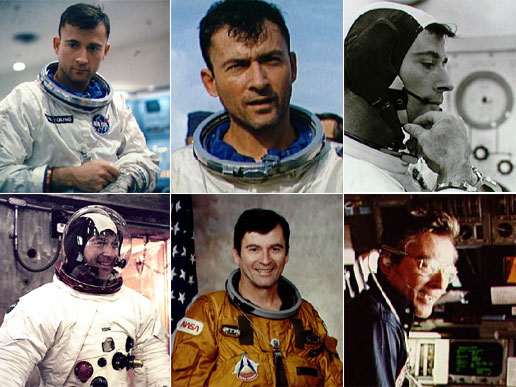

John W. YOUNG |
|
PROFILE |
|
Full Name: |
John Watts YOUNG. |
Rank: |
Captain, US Navy (Deceased). |
Born: |
24 September 1930, in San Francisco, California (American). Raised in Orlando, Florida. |
Died: |
5 January 2018, in Houston, Texas, from complications from pneumonia at the age of 87. |
Education: |
1948: Graduated from Orlando High School, Florida.
1952: BSc degree in Aeronautical Engineering from Georgia Institute of Technology, Atlanta, Georgia. |
Career Highlights: |
Jun 1952: Joined the US Navy
1952-53: Fire Control Officer on the destroyer USS Laws.
Jun 1953-Jun 1954: Flight training, Naval Basic Air Training Command, Pensacola, Florida; followed by a six-month detachment at the Navy Advanced Training Station, Corpus Christi, Texas.
Jan 1955-Feb 1959: Fighter Squadron 103; completed two tours on the USS Coral Sea and USS Forrestal, flying F-8 Crusader and F-9 Cougar aircraft.
Feb 1959-Apr 1962: Test Pilot, Naval Air Test Center, Patuxent River, Maryland; involved in numberous test programmes with F-8D Crusader and F-4B Phantom aircraft; (Mar-Apr 1962) assigned to Project High Jump time-to-climb programme and set world records in the 3,000 and 25,000 metre altitude classes in the F-4B Phantom.
Apr-Oct 1962: Maintenance Officer, Squadron 143, NAS Miramar, California. |
|
|
NASA ASTRONAUT ASSIGNMENTS |
|
1962: |
(17 Sep) Selected as one of the nine astronauts chosen by NASA for Group 2 ("The Next Nine"); (Oct) reported to NASA; basic training. |
1963: |
(26 Jan) Assigned technical duties in environmental control systems, personal and survival equipment. |
1964: |
(13 Apr) Named as Pilot (PLT) Gemini 3; Gemini mission training. |
1965: |
Gemini mission training; (23 Mar) flew as PLT, Gemini 3 (4 hrs 52 min); first US two-person space flight; first crewed spacecraft to manoeuvre in space; (5 Apr) named as Back-Up (BUp) PLT Gemini 6; Gemini mission training; (15-16 Dec) BUp PLT Gemini 6. |
1966: |
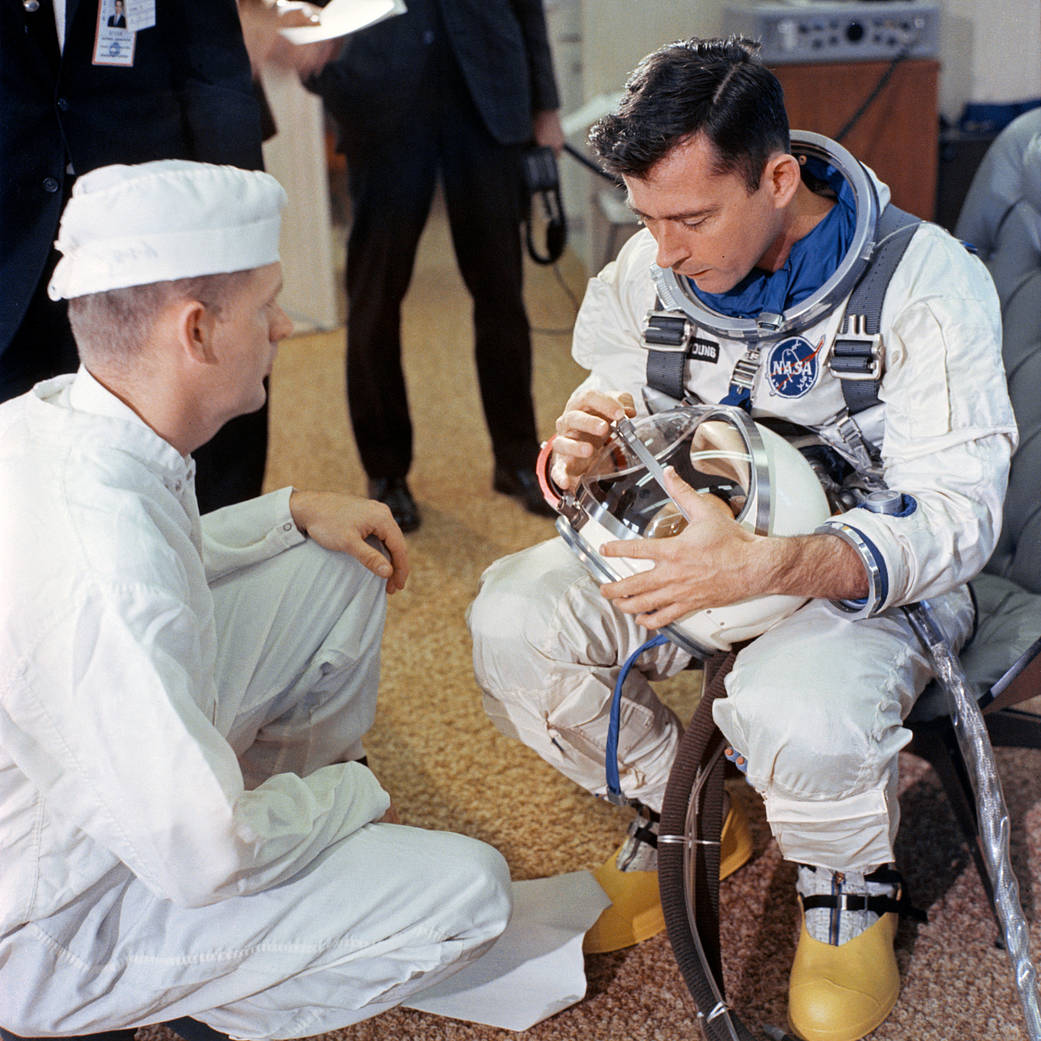
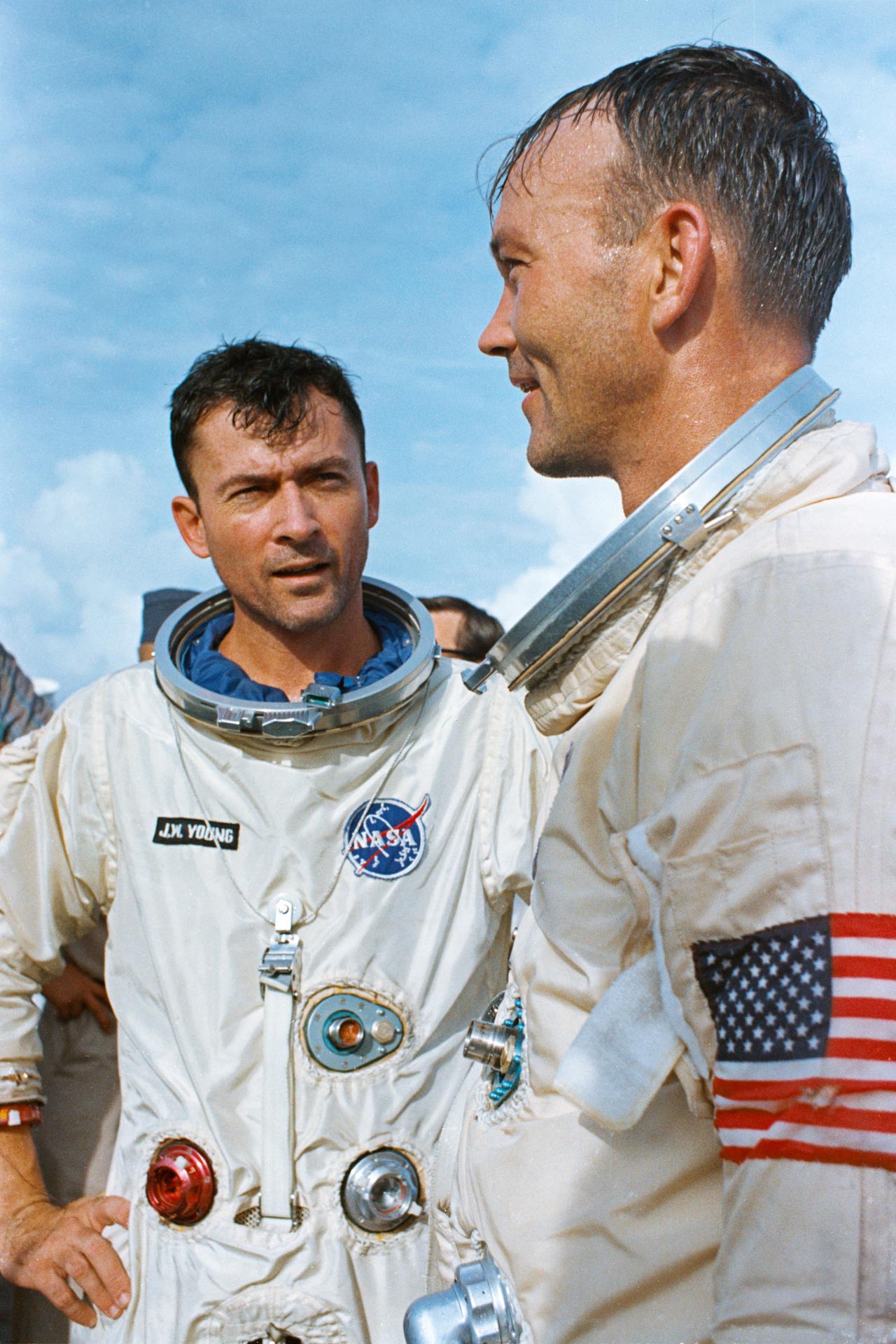
(24 Jan) Named as Command Pilot Gemini 10; Gemini mission training; (3 May) awarded US Navy Astronaut Wings; (18-21 Jul) flew as Command Pilot Gemini 10 (2 days 22 hrs 46 min); (Sep) Capcom Gemini 11; (22 Dec) named as BUp Command Module Pilot (CMP) for second crewed Apollo flight (Apollo 2); Apollo mission training. |
1967: |
Apollo mission training; mission suspended due to 27 Jan Apollo 1 pad fire; generic Apollo training; (9 May) named BUp CMP first crewed Apollo (later designated Apollo 7); Apollo mission training; (20 Nov) confirmed as BUp CMP Apollo 7; Apollo mission training. |
1968: |
Apollo mission training; (Oct) BUp CMP Apollo 7 and served as Capcom; (13 Nov) named as CMP Apollo 10; Apollo mission training. |
1969: |
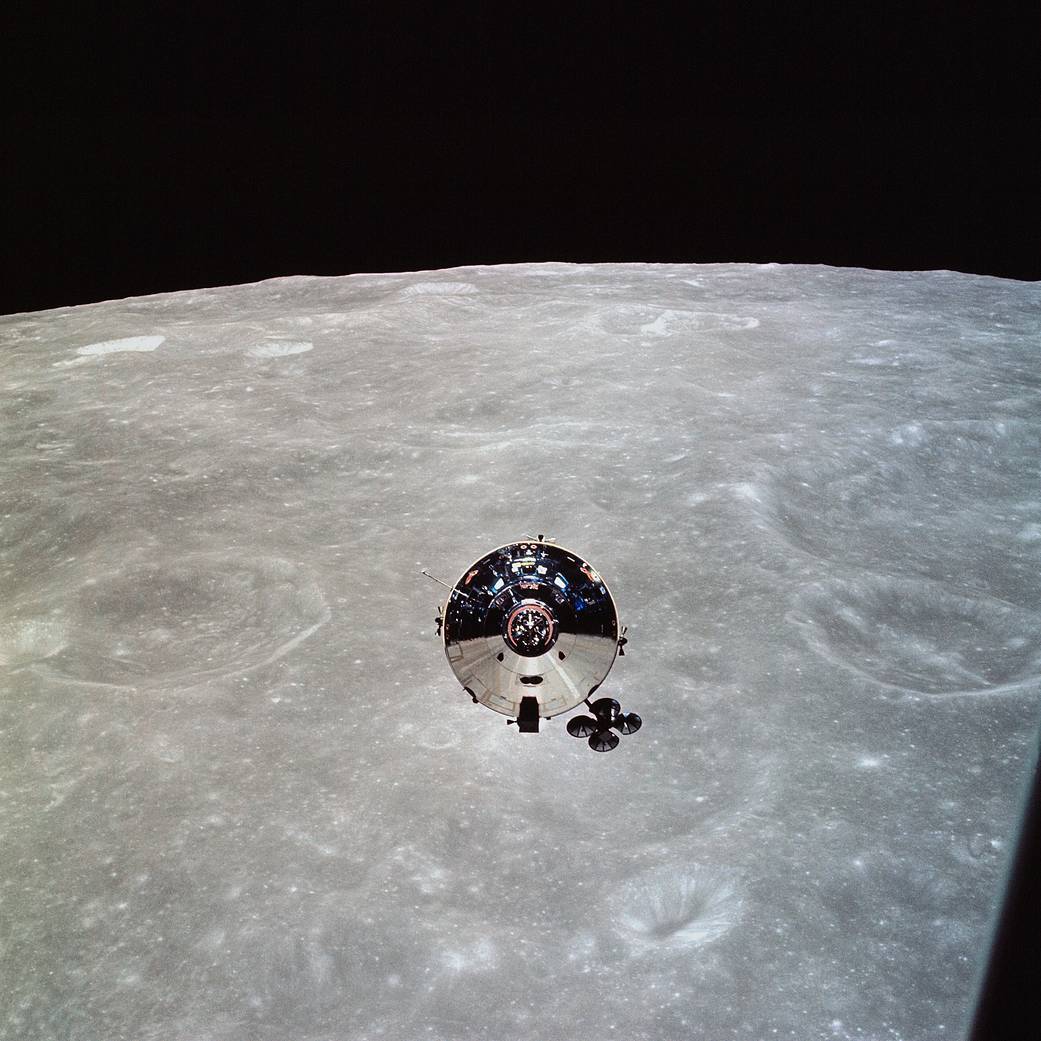
Apollo mission training; (18-26 May) flew as CMP Apollo 10 (8 days 0 hrs 3 min); first person to fly solo in lunar orbit; (5 Aug) named as BUp Commander (CDR) Apollo 13; Apollo mission training. |
1970: |
Apollo mission training; (Apr) BUp CDR Apollo 13; served as Capcom during the emergency. |
1971: |
(31 Jan) Supported Apollo 14 evaluation of docking problem; (3 Mar) named as CDR Apollo 16; Apollo mission training. |
1972: |
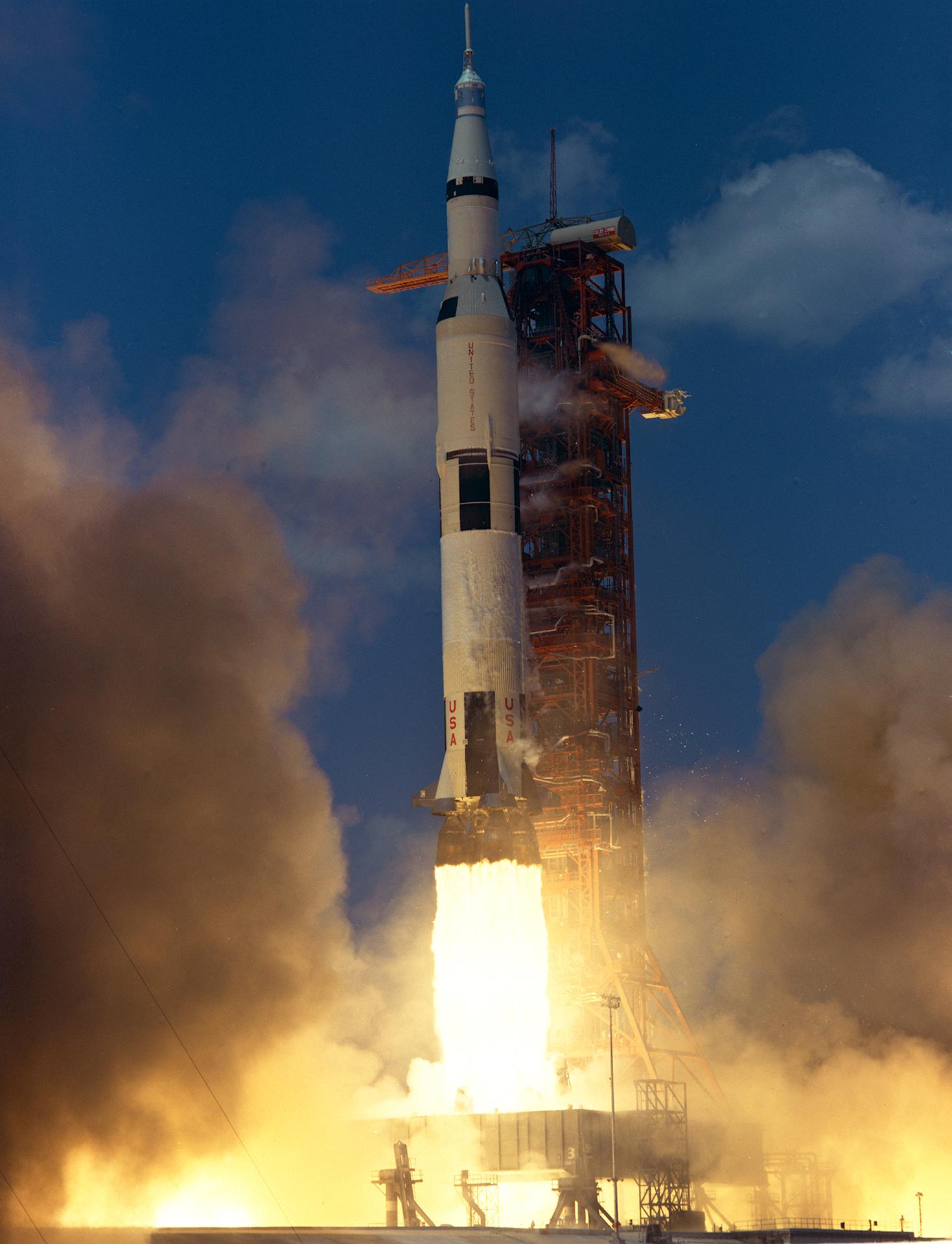
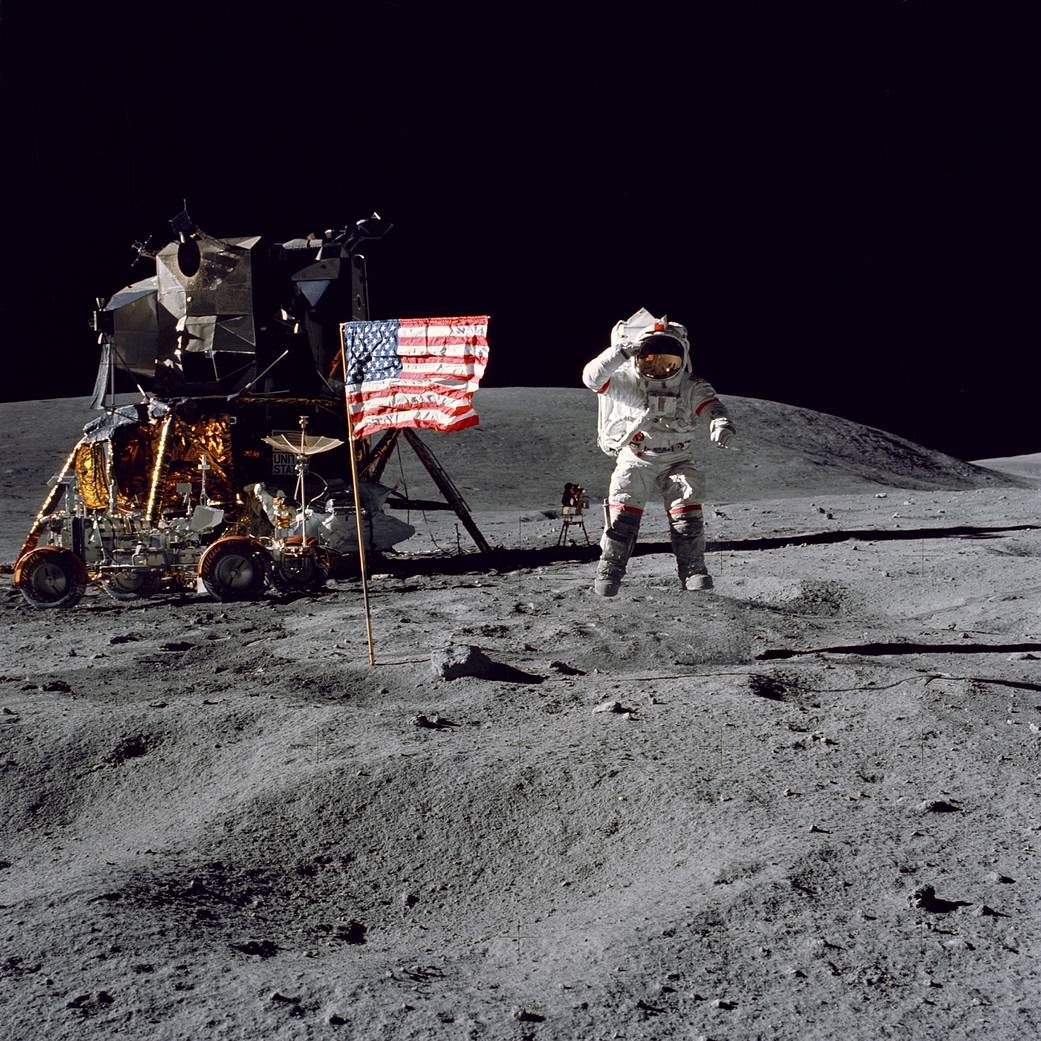
Apollo mission training; (16-27 Apr) flew as CDR Apollo 16 (11 days 1 hr 51 min); fifth crewed lunar landing; 9th person to walk on the Moon; 3 EVAs (20 hrs 14 min); (21 Apr) EVA 1 (7 hrs 11 min); (22 Apr) EVA 2 (7 hrs 23 min); (23 Apr) EVA 3 (5 hrs 40 min); (May) named as replacement (for Dave Scott) BUp CDR Apollo 17; Apollo mission training; (7-19 Dec) BUp CDR Apollo 17 and served as Capcom during mission. |
1973: |
(Jan) Named as Chief of the Astronaut Office (Code CB) Space Shuttle Branch; Shuttle development technical assignments in crew safety issues. |
1974: |
(Apr) Additional duties as Acting Chief of the Astronaut Office; (Jun) Chief Astronaut (until Apr 1987). |
1975: |
|
1976: |
(Sep) Retired from the US Navy with the rank of Captain. |
1977: |
Member of the 1978 (Group 8) Astronaut Selection Board. |
1978: |
(17 Mar) Named as CDR of Shuttle Orbital Flight Test-1 (OFT-1)/ STS-1; Shuttle mission training; relinquished Chief Astronaut role to Al Bean for duration of STS-1 training. |
1979: |
Shuttle mission training. |
1980: |
Shuttle mission training. |
1981: |
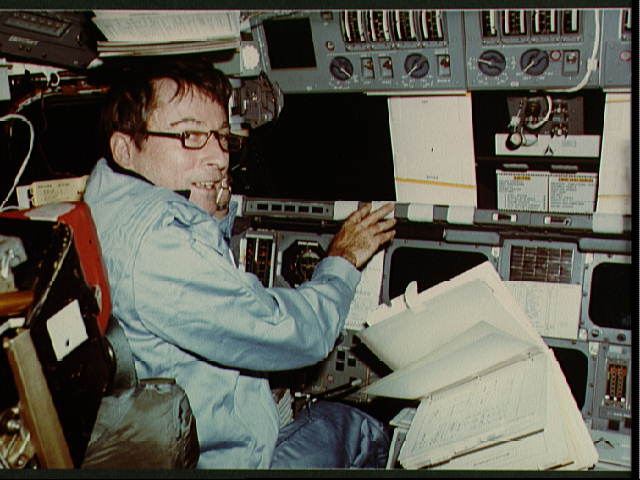
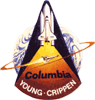
Shuttle mission training; (12-14 Apr) flew as CDR STS-1 Columbia (2 days 6 hrs 20 min); first Space Shuttle orbital mission; Young became the first person to make 5 space flights; (Apr) resumed duties as Chief Astronaut. |
1982: |
Chief Astronaut; (20 Apr) named as CDR STS-9/Spacelab 1; relinquished duties as Chief Astronaut for the duration of his STS-9 assignments; Shuttle mission training. |
1983: |
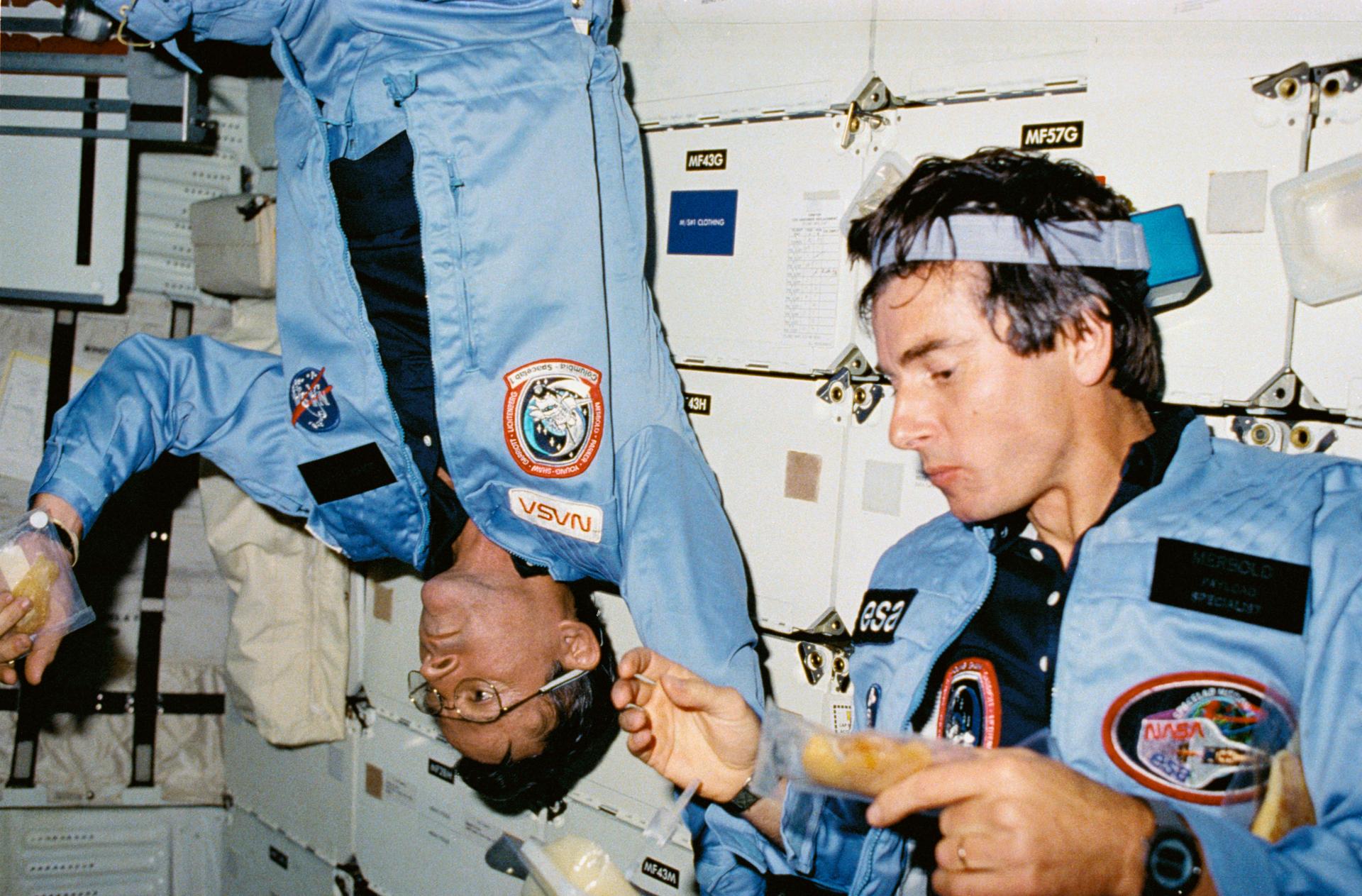
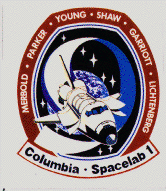
Shuttle mission training; (28 Nov - 8 Dec) flew as CDR STS-9/Spacelab 1 (10 days 7 hrs 47 min); first Spacelab mission; Young became the first person to make 6 space flights. |
1984: |
Resumed duties as Chief Astronaut. |
1985: |
Chief Astronaut; (19 Sep) named as CDR STS-61J (Hubble Space Telescope deployment mission); Shuttle mission training; relinquished duties as Chief Astronaut during STS-61J training. |
1986: |
Shuttle mission training; (Feb) crew stood down as a result of the 28 Jan Challenger accident; Shuttle generic mission training. |
1987: |
Shuttle generic mission training; (15 Apr) reassigned from Chief Astronaut to new administrative position at NASA JSC effective May; replaced as Chief Astronaut by Dan Brandenstein; replaced as CDR Hubble deployment crew by Loren Shriver (not announced until Mar 1988). |
May 1987 - Feb 1996: |
(May 1987 - Feb 1996) Special Assistant to the Director of JSC for Engineering, Operations and Safety; remained eligible to command future Shuttle crews. |
Feb 1996 - Dec 2004: |
(Feb) Associate Director (Technical) JSC; remained eligible to command future Shuttle crews. |
31 Dec 2004: |
Retired from NASA after 42 years. |
|
|
POST-ASTRONAUT EXPERIENCE |
|
From 2005: |
Continued to advocate for the development of the technologies that will allow us to live and work on the Moon and Mars. |
5 Jan 2018: |
Died following complications from pneumonia at the age of 87. |
|
|
John YOUNG Space Flight Missions |
||||||
Mission |
Vehicle |
Position |
Dates DD/MM/YYYY |
Duration DD:HH:MM:SS |
Orbits |
EVAs (HH:MM) |
Gemini 3 |
Titan II |
Pilot |
23/03/1965 |
00:04:52:51 |
3 |
0 |
Gemini 10 |
Titan II |
Command Pilot |
18/07/1966-21/07/1966 |
02:22:46:39 |
43 |
0+ |
Apollo 10 |
Saturn V |
CM Pilot |
18/05/1969-26/05/1969 |
08:00:03:23 |
1.5* |
0 |
Apollo 16 |
Saturn V |
Commander |
16/04/1972-27/04/1972 |
11:01:51:25 |
1.5* |
3 (20:14)++ |
STS-1 |
Columbia |
Commander |
12/04/1981-14/04-1981 |
02:06:20:53 |
36 |
0 |
STS-9 |
Columbia |
Commander |
28/11/1983-08/12/1983 |
10:07:47:23 |
167 |
0 |
|
||||||
Missions Flown: |
6 |
Total Flight Time: |
34:19:42:34 |
252 |
3 (20:14)++ |
|
+Supported EVA by Pilot Mike Collins from inside depressurised crew compartment of GT-10 * Young also completed 31 lunar orbits (including 4 solo) on Apollo 10 and 36 on Apollo 16 ++Lunar surface EVAs |
||||||
Space Explorer Achievements |
||||||
First person to fly five and six space missions (2 Gemini; 2 Apollo; 2 Shuttle) First US two-person space flight (Gemini 3) Longest serving US NASA astronaut - 1962-2004 (42 years) First person to fly solo in lunar orbit (Apollo 10) 9th person to walk on the Moon (Apollo 16) First commander of Space Shuttle (STS-1 Columbia, 1981) Commander, first Spacelab mission (STS-9 Columbia, 1983) First to conduct seven rocket launches (6 from Earth, 1 from the Moon) |
||||||